‘Radical privacy is at the core of what we do’: Q&A with OMGyno
Using technology to fight the twin scourges hindering sexual and reproductive health: high stigma and low access

Using technology to fight the twin scourges hindering sexual and reproductive health: high stigma and low access
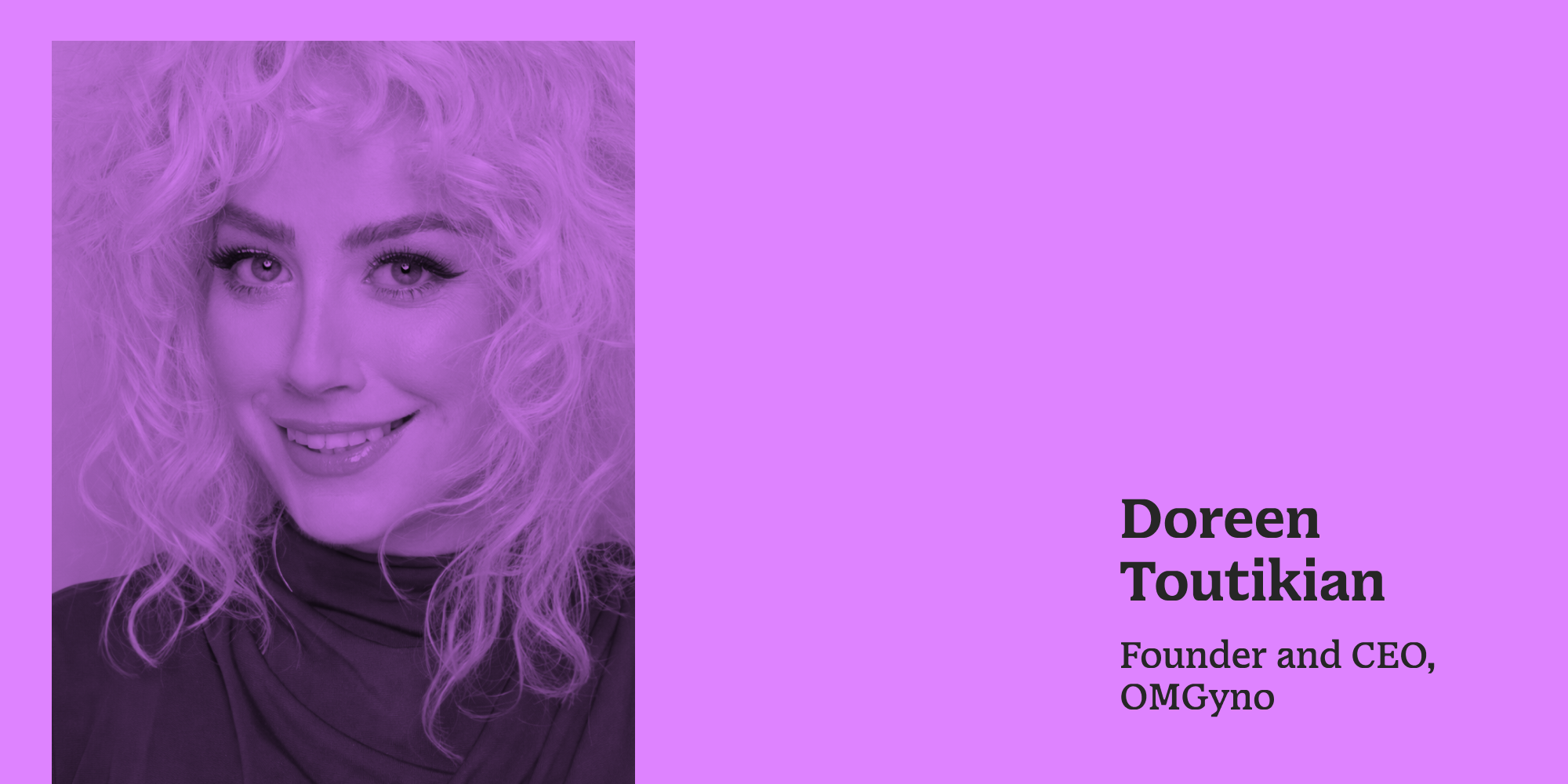
A cornerstone of our work on building Suwali has been to collaborate with like-minded public interest organizations so they could test the tool and share constructive feedback on what works — and what doesn’t. One of the first pilot partners to sign on was OMGyno, a social enterprise that uses digital tools to improve sexual and reproductive health care outcomes in Lebanon and Jordan. We recently caught up with Doreen Toutikian, founder and CEO of the organization, to learn more about their work and how AI tools can help the group achieve their goals.
This interview has been lightly edited for length and structure.
The stigma surrounding female sexuality and reproductive health in conservative societies creates systemic barriers to care, putting lives at risk. Cultural taboos, discrimination, and the lack of safe, private gynecological services prevent millions of women, young girls, and gender nonconforming people across the Middle East and North Africa (MENA) from seeking sexual and reproductive health care. This leads to misinformation, preventable diseases, and late-stage diagnoses — worldwide, 94% of the deaths caused by cervical cancer occur in low- and middle-income countries, and early detection could help save so many lives. OMGyno exists because the health care system was not designed with these communities in mind, and we are redesigning it from the ground up.
Addressing stigma and access requires working across multiple fronts at once.
Radical privacy is at the core of what we do. Our at-home testing kits for sexually transmitted infections (STIs), vaginitis, HPV, and other health concerns make it so a woman never has to walk into a clinic, give her name, or explain herself to anyone. She collects her sample at home, a courier picks it up, a certified lab processes it, and her results arrive digitally — encrypted, anonymous, identified only by a number. For many of our users, it is the first time they have ever been tested for anything. That alone speaks to the scale of the gap we are working to close.
But diagnostics are only meaningful when they lead somewhere. That is why we pair testing with telehealth — connecting users with vetted, progressive doctors who have been recommended by the community and who are committed to providing care without judgment, wherever the user is located.
We also take education seriously, because misinformation is its own kind of health crisis. The questions we receive daily — about period myths, fertility fears, and infection stigma — make it clear that people are navigating their bodies with dangerously incomplete information. Our content is built to meet people where they are: in their own language, addressing their actual concerns.
Partnerships with local labs, nongovernmental organizations, and health care providers allow us to extend our reach into communities we cannot serve alone — in shelters, in underserved areas, in places where formal health services have long been inaccessible.
Underlying everything we do is a commitment to user agency. We give people tools, not just information — and the ability to make informed decisions about their own bodies.
OMGyno was built by women from Lebanon who experienced firsthand the gaps and inequalities in sexual and reproductive health care. We faced misinformation, stigma, a lack of options, and discrimination. We learned from our own difficult experiences and built the solution we wished had existed when we needed it. This is not an abstract problem for us — it is personal, and that is what drives everything we do.
We listen directly and continuously. Our team is majority LGBTQ+, which means the communities we serve are not external to us — we are part of them. That lived proximity shapes everything from the questions we ask to the language we use and the assumptions we refuse to make.
Through direct messages, WhatsApp chats, emails, and an open “ask us anything” form on our website, we have collected over 1,500 real user questions from across the MENA region. We gather feedback at the end of every test and learn continuously from how people move through the platform. The most common topics include vaginitis and vaginal infections, STIs, HPV, and cervical cancer screening.
What is equally revealing is the nature of the questions themselves. Alongside clinical concerns, we regularly receive questions rooted in long-standing cultural myths — that menstruating women shouldn’t cook, that masturbation causes infertility. These are not fringe beliefs; they are widely held and rarely challenged, and they have real consequences for how people understand and care for their bodies. Monitoring these questions helps us locate information gaps and figure out what content is missing.
Sexual and reproductive health is consistently deprioritized in crisis settings and seen as nonessential — yet the need increases dramatically. Crowding in shelters and poor hygiene conditions heighten the risk of infections. Primary health care centers are overwhelmed by the volume of people seeking care. Funding is limited and inconsistent. Access to safe, private care is severely reduced.
Critically, the most vulnerable people — migrant domestic workers, people living with disabilities, LGBTQ+ individuals — are the least likely to be reached by existing services. These are the people OMGyno is specifically designed to serve.
We’ve found that generic AI tools consistently fall short because they lack the cultural grounding required for outreach and communication in the MENA region. They also typically cannot direct users to relevant local resources. Suwali is being built with this level of specificity at its core.
The tool is helping us respond to a real and observable shift in how people seek health information — they want immediate, conversational answers rather than having to search through articles or navigate clinical language. Suwali’s Arabic-language support makes it genuinely accessible to the communities we serve.
In Arabic, menopause is commonly referred to as “the age of despair” — a term that carries with it an entire cultural framework about how women’s lives are perceived. Part of what we are doing with Suwali, and with OMGyno more broadly, is actively working to redefine these terms and replace them with language that is accurate, empowering, and free from the weight of stigma.
Suwali is already showing us what becomes possible when AI isn’t just retrofitted for a specific region as an afterthought. The ability to provide immediate, accurate, stigma-free sexual and reproductive health information in Arabic — at any hour, to anyone with a phone — is not a small thing in contexts where asking a doctor the same question might feel impossible.
Looking further ahead, we also see AI playing a meaningful role in triage support and personalized health guidance, as well as supporting the analysis of anonymized health data to surface regional trends that currently go unmeasured and unreported.
Our concerns are significant, and we take them seriously. User privacy is nonnegotiable — any AI integration must operate within our Zero-PII* framework. The risks of misinformation in a domain as sensitive as sexual and reproductive health are real, particularly for communities already navigating stigma and deep mistrust of health institutions. And tone matters enormously: the AI must be respectful, feminist, and culturally sensitive. We are building carefully and deliberately, because the communities we serve deserve nothing less.
OMGyno’s primary focus is geographic expansion within the MENA region, deepening our presence where the need is greatest. We are currently operational in Lebanon and Jordan, and our near-term priority is to establish partnerships in the Gulf and North Africa — with local labs, health care providers, and nongovernmental organizations who share our values and understand the communities they serve. We are expanding strategically, not just broadly.
Alongside all this, we are finalizing the launch of our platform’s second version, which will provide a more robust, interoperable infrastructure to support multicountry operations and smoother onboarding for new partners. Our goal is to become the most trusted sexual and reproductive health platform for Arabic-speaking communities across the region.
We hope readers come away with a clearer sense of what is actually at stake when stigma goes unchallenged — not just socially, but clinically. When 33% of the HPV tests we distribute for free in Lebanon come back positive for high-risk and potentially high-risk strains, this is not a statistic about individual choices; it is a measure of systemic failure.
For those working in media, journalism, and advocacy, we hope this raises questions about the role that accurate, culturally grounded information plays in health outcomes — and the responsibility that comes with having a platform. For those in the human rights space, we hope it strengthens the case for sexual and reproductive health as a fundamental right, not a secondary concern.
And for anyone in the region who recognizes themselves in this story — we want them to know that OMGyno and Suwali exist, that private and stigma-free care is accessible, and that they are not alone.
* Personally identifiable information
Want to stay up to date with Meedan and its partners? Sign up for the Checklist newsletter today.