The tools built to detect gender-based violence online were not built for most of the world. From sexual harassment to doxxing to other coordinated forms of abuse, this harm has been well documented across major social media platforms over the past decade, but the interventions meant to tackle it have focused overwhelmingly on English-language speakers in North America and Europe, leaving the Larger World with far weaker protection online.
What about everyone else?
Over the past three years, this burning question — “What about everyone else?” — has driven Meedan’s program and research teams to study the unique linguistic and contextual dynamics of tech-facilitated gender-based violence (TFGBV) in the Larger World.
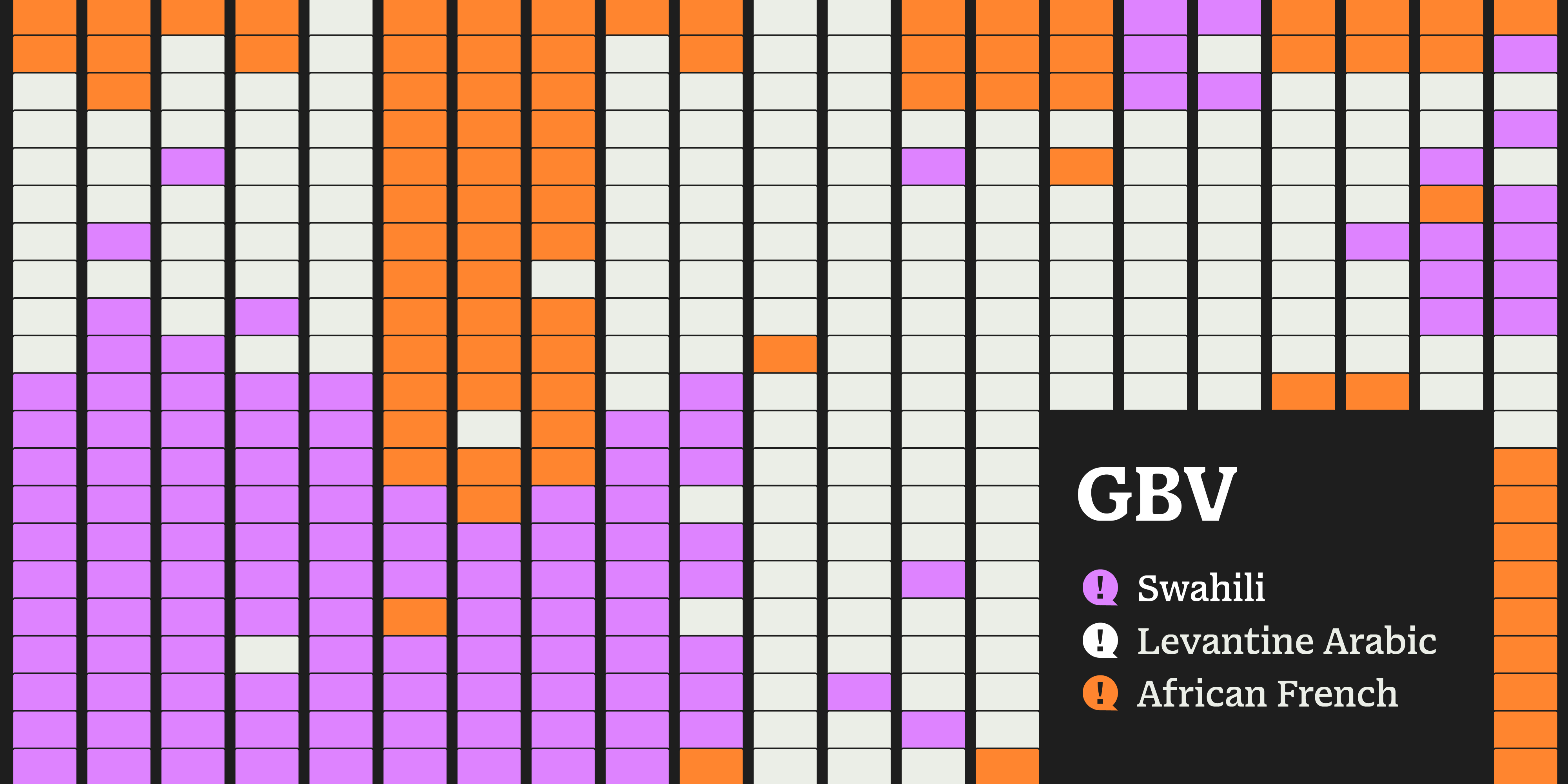
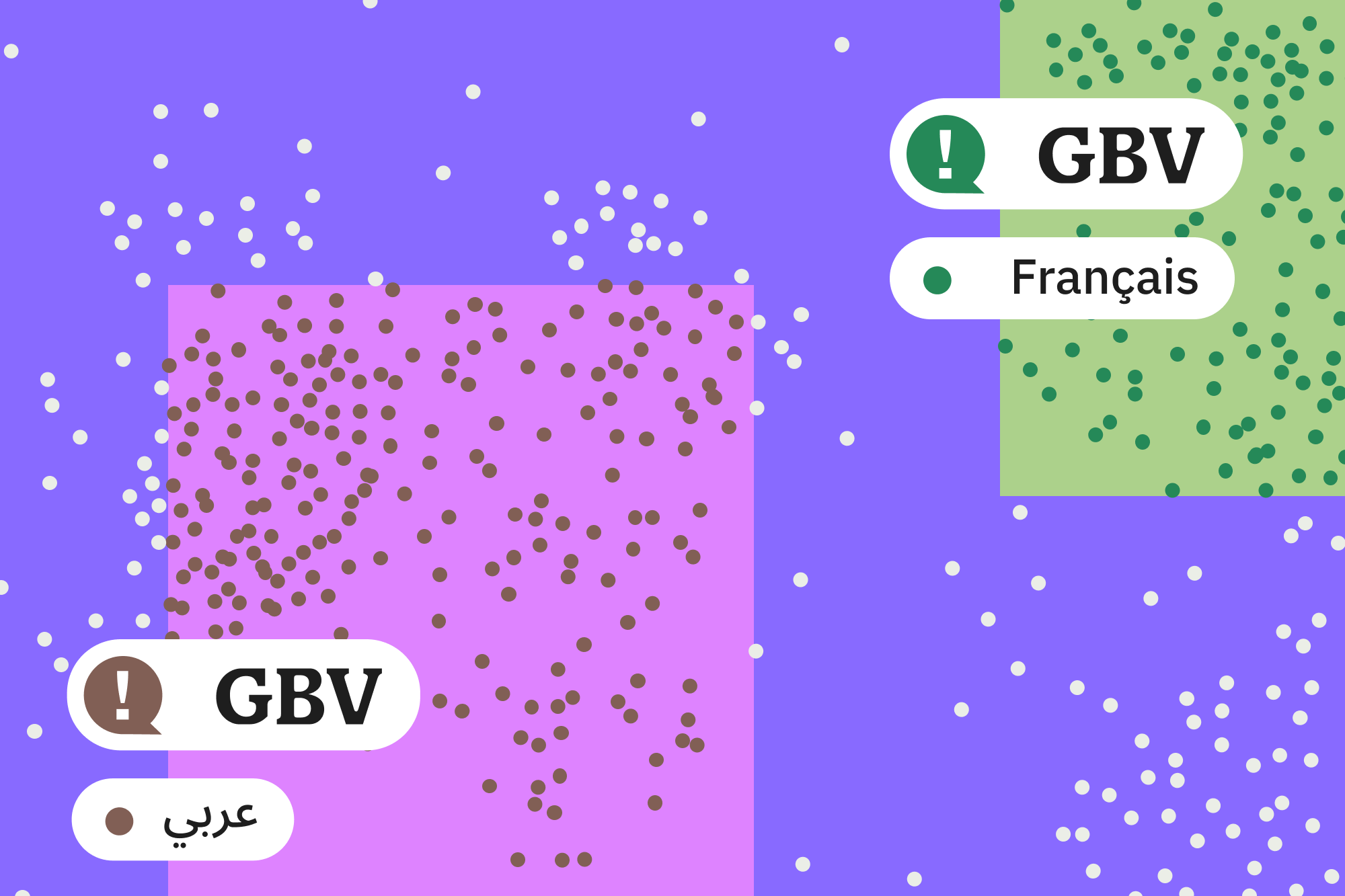
Building from our 2024 study on gendered disinformation in South Asia, in 2025 we developed a new study looking at TFGBV in Swahili, Levantine Arabic and African French on the social web. As an organization that works primarily with partners across the Larger World, we did not want to begin with our own assumptions about what constitutes gender-based violence. Instead, we worked with three partners — the Jordan Open Source Association, the Kenya Internet and Communications Technology Action Network (KICTANet), and HerSafeSpace (a program from the Nigeria-based organization Brain Builders Youth Development Initiative) — to define the issue from the ground up and to co-design a mixed-methods study.
Together, we adopted the UNFPA definition of TFGBV from its 2021 Making All Spaces Safe report as our baseline, then worked with partners to build a culturally grounded taxonomy and contextual understanding that reflected local realities, languages, histories, and experiences of marginalization. Using both crowdsourcing and social listening methods, we then collected data that we suspected to be TFGBV in all three languages. Teams worked to classify each case based on severity across a taxonomy that distinguishes between overt attacks involving explicit slurs and threats and more covert forms like animosity, where misogyny is wrapped in casual observations, jokes, or backhanded comments.
In subsequent phases, our research team used these datasets to develop machine learning classifiers intended to identify TFGBV in the study’s target languages and help reduce its spread.
Our end goal was to build machine learning tools to detect and help reduce this form of online harm. But before a machine can learn to recognise this type of content, our team had to help decode and contextualize it. This became a core principle of the project: behind every piece of data, there was a real person helping to source content, interpret its meaning, and annotate it for further research. Their knowledge and lived experience made it possible to train systems that can better identify complex and context-dependent forms of abuse in the future.
Old news: Harassment masquerading as moral authority
At the outset, we observed a pattern that was very familiar to our colleagues from across the regions where we work, wherein attacks and insults directed at women were framed as assertions of moral or religious authority.
One example from our African French dataset included the following phrase:
“Dieu ne donne jamais de fesses à une femme têtue, orgueilleuse et impolie. Donc évitez les filles comme ça.” [God never rewards a stubborn, proud, and rude woman with a fertile figure. So avoid girls like that.]
Without using direct insults, the speaker offers advice-like information, reinforcing the harmful notion that women should be humble, subservient, and soft-spoken.
When women talk about politics or public affairs online, the picture becomes more complex. Across regions, political speech from women often elicits direct verbal attacks that do not debate their political stances but rather target them on personal or religious grounds. We saw this in our work in South Asia and in our dataset from Jordan in this project.
Our partners gathered multiple pieces of content attacking the Jordanian human rights lawyer and activist Hala Ahed, alongside other women who were targeted solely for expressing their opinions on public affairs. But most attacks on Ahed had nothing to do with her legal work. One such post accused Ahed of “deceiving” people about her religion:
“...this rebellious, shameless, and reckless Hala Ahed must take off this woven fabric that she has put on her head to deceive Muslim girls and not deceive the Islamic community into thinking that she is a Muslim.”
The implication is that Ahed, who wears a hijab, is somehow not faithful because of her work as a human rights defender.
More harm than meets the eye
Much of the harmful content we saw in these languages did not look obviously abusive at the surface. Instead, it often appeared in the form of coded language, metaphors, or cultural references that carried misogynistic meanings within specific communities, but could look neutral or harmless to an outsider. Importantly, content like this would also likely evade AI-driven content moderation, which is part of why it so often goes unchecked.
In our dataset from Kenya, one post showed a photo of a woman blowing two huge plumes of smoke from her nostrils. The caption read: “There is a guy somewhere that will settle down with this Mitsubishi FH, KAA 638J.” The intention of the speaker was to liken the woman in the photo to a heavily-polluting, Mitsubishi-brand truck. The alphanumeric code that follows, KAA 638J, refers to license plate numbers common in Kenya in the 1960s. The implication is that the woman, like the truck, is old and less suitable for marriage.
Our partners in Jordan saw plenty of harmful content that relied on sarcasm, euphemisms, or references to honor, morality, and social norms rather than explicit insults. This requires a high level of cultural and contextual understanding, making annotation more subjective and less consistent.
One post invoked the following proverb: “Nothing remains in the henhouse except the plucked one,” which describes a situation where all the respectable or qualified people are gone, and the only person left talking is the least qualified one. On its own, the phrase is unremarkable. But when attached to a specific person — in this case, again, the female Jordanian human rights defender Hala Ahed — it takes on a more malicious meaning.
Real language is a moving target
Another challenge stemmed from the way people engage in everyday online conversation, where language is constantly evolving. For instance, while Swahili is the national language of Kenya, standard Swahili is rarely the primary mode of everyday communication. Instead, it is more common to encounter what’s known as Sheng, a constantly evolving mix of Swahili, English, and/or one of the 60 other languages spoken in the country. Uses of Sheng vary across age groups, social class, geography, and even platforms.
Our Kenyan partner, KICTANet, had extensive prior experience working on women’s digital rights in Kenya, and noted at the start of this project that Swahili/Sheng is a very dynamic language. New words and expressions are invented on a near-daily basis. A classifier trained on yesterday’s vocabulary might miss today’s nuance. On top of this, the same word or phrase can mean something completely different depending on where you are in the country, who is saying it, and in what context. We believe this helps explain some of the difficulties organizations have in building tools that work across the full range of communities where TFGBV occurs.
One common expression that rapidly took on a dramatically different meaning is “asalimiwe,” which directly translates as “let them be greeted.” During public protests concerning a 2024 finance bill in Kenya, this term was popularized on platforms such as X as a rallying call to doxx a person. An attacker would post the person’s phone number, home address, or other private information publicly, and the crowd would follow with a flood of harassing messages, threats, and calls.
Initially, these calls primarily targeted political officials deemed corrupt or complicit in injustice. However, in our dataset, we encountered several “asalimiwe” posts targeting women. One post featured a photo of a woman, with a caption that read: “Si huyu husband snatcher tupewe namba asalimiwe hapa na pale?” [Give us the number of this husband-snatcher so that we can greet her.]
Many challenges in annotating TFGBV content in Arabic stem from the language’s linguistic complexity. Users frequently employ non-standard language, featuring inconsistent spelling and a distinct lack of grammatical structure. Moreover, Arabic’s rich morphology, or “Sarf,” means that words can take many forms depending on gender, tense, and context, while meaning is often shaped by subtle linguistic variations. These features make it difficult to accurately identify harmful content, particularly when abuse is distributed across different linguistic structures.
Within the framework of our project, our research focused on Levantine Arabic as used in Jordan. While Levantine Arabic shares deep linguistic roots across the region, Jordanian Arabic possesses unique nuances shaped by its specific socio-political and cultural landscape. Online violence does not happen in a vacuum; it is deeply tied to local context and varying societal levels of gender acceptance and women’s liberation.
Notes on our approach
When we began collecting data for the study, we used a mixed-methods approach, relying both on crowdsourcing and social media listening to gather relevant examples of TFGBV. While doing so, we ensured robust safeguards for privacy, consent, confidentiality, and data protection. Collecting data was not simply about volume; it was about gathering meaningful, context-rich examples in ways that were safe and ethical.
Once we had a large set of social media posts and messages to review for each language, each piece of content was reviewed and categorized by two local annotators. A third reviewer would step in when there were disagreements. As the project progressed, annotators also reviewed uncertain or complex cases, using them to further refine our methodology and annotation framework and to improve the dataset. This continuous feedback loop strengthened both the quality of the data and the performance of the models being trained.
Because this work required people to engage directly with harmful content, we also recognised the emotional toll it could take. Many of the annotators and project members involved came from the same communities affected by these forms of violence and, in some cases, had experienced similar harms themselves. We built space into the project to acknowledge vicarious trauma, discuss its impact openly, and share practical approaches for protecting wellbeing throughout the process.
Our partners, KICTANet, JOSA, and Brain Builders Youth Development Initiative, helped shape every stage of the project, contributing their expertise, lived experience, analysis, and deep understanding of local languages, cultures, and online harms. Their insights were critical to defining the problem, collecting and annotating data, and ensuring that the project’s outputs are grounded in the realities of the communities they serve.
As we move into the next phase of this work, we will apply these lessons to new languages, communities, and contexts. The goal is not to replace human judgment, but to use it to build systems that can operate more effectively at scale.
This work was made possible by support from the Christchurch Call Foundation as a part of the Project Catalyst consortium and the United Nations Population Fund (UNFPA), whose 2021 definition of TFGBV provided the baseline for our approach. The views expressed are those of the authors and do not necessarily reflect the views of UNFPA, the United Nations or any of its affiliated organizations.