How to cultivate independence in the Big Tech era
As authoritarians and tech titans remake global information systems, independent media must chart new paths to sustainability.


As authoritarians and tech titans remake global information systems, independent media must chart new paths to sustainability.
Over the past 18 months, the U.S. government’s gutting of foreign aid programs has triggered a drastic reduction in philanthropic funding for media, with many donors redirecting their resources to fill gaps in public health and humanitarian aid. At the same time, the most powerful gatekeepers of the internet are changing how we find information. More and more, commercial tech platforms are promoting one-size-fits-all AI tools that are rapidly throwing up barriers between news sites and would-be readers.
Between the ever-shifting challenges of news distribution and dramatic declines in philanthropic funding, media and information-focused organizations are scrambling to sustain their operations.
How do we cultivate a thriving digital media sector that’s more firmly independent? Meedan’s program team has begun facilitating “Financial Resilience as Resistance,” a series of partner conversations where we’re wrestling with this question and sharing strategies for sustainability. At a recent session, Sérgio Spagnuolo, director of the Brazil-based Núcleo Jornalismo, challenged participants to look beyond the conveniences that Big Tech so often promises:
“If you want to launch a newsletter, you go to Substack because it's free. If you need email, you choose Google. If you want distribution, you post on Instagram. We rarely stop to ask whether these are actually the best choices for our organization.”
As Spagnuolo notes, digital media have spent more than a decade at the mercy of tech platforms that drive most traffic online. Even relatively small changes to algorithms or platform architecture can upend a newsroom’s distribution strategy. Spagnuolo argues that serious planning around impact, goals, and long-term costs needs to be a bigger part of how small media outlets make decisions about distribution and audience engagement:
“Platforms offer incentives—they promise followers, reach, and growth—but we need to ask deeper questions: Are we reaching the right people? What are the long-term costs? What happens when the free model changes? Those are the trade-offs every newsroom should be considering.”
We know that the conversations that help newsrooms navigate these questions are difficult — but they’re easier when we work together. If you’re interested in joining a session on sustainability or want to connect with us to talk more, get in touch.
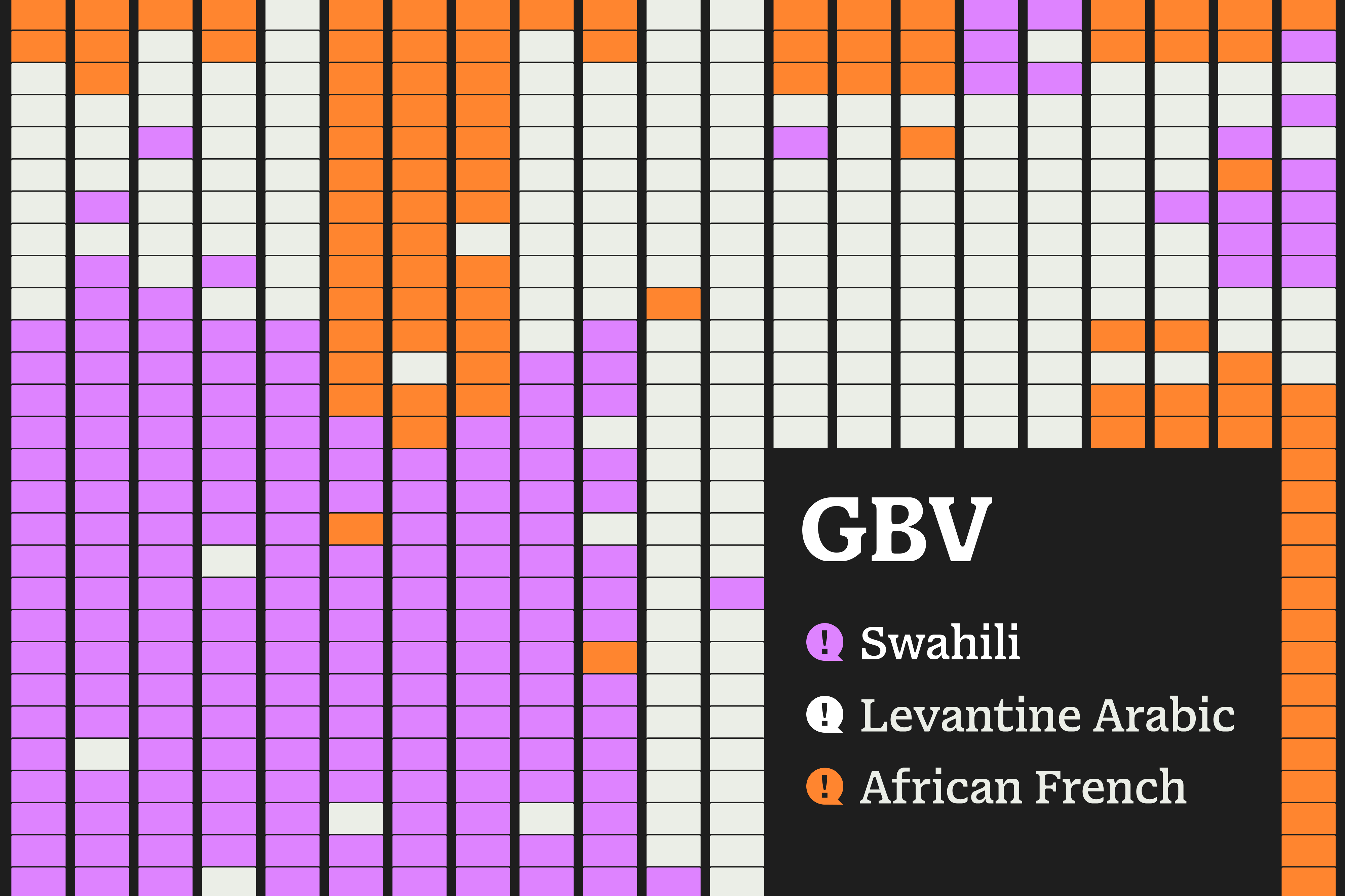
In our last edition, we wrote about our recent study tracking tech-facilitated gender-based violence in African French, Levantine Arabic, and Swahili. Since then, our partners at KICTANet, who co-led efforts in Swahili, have written an in-depth meditation on this work and the constant evolution of language over time. They write:
“...a purely statistical approach to content moderation will always be one step behind. A classifier trained on last year’s slang has no way of knowing that a word meaning “greetings” now means ‘here is where you send the mob.’”
Our partners in India have been working hard to cover youth-led demonstrations that began last month and just days ago brought about the resignation of India’s education minister. Sparked in response to a comment from India’s top judge, in which he compared young, unemployed people to cockroaches, demonstrators pressing for education and labor reforms have now become targets of surveillance operations and digital censorship by state authorities. Writing for The Quint, media veteran Nikhil Pahwa reports that Indian police are using facial recognition tools and AI-enabled “smart glasses” to track protester movements in real time. The Internet Freedom Foundation is investigating the matter and is also tracking evidence of censorship and shadow-banning of protest content on Instagram.
What sets Suwali apart from commercial AI chatbots? In a manner of speaking, Suwali answers “with its feet.” Instead of trying to predict a correct answer, it is designed to scour the archives and offer a response — only if there’s one to be found. In a recent blog post, Meedan Senior Software Engineer Kristina Šekrst likened Suwali to her childhood librarian:
[Our librarian] seemed to carry the entire library in her head, but she never answered with her head – she answered with her feet. She would walk me to the shelf, pull the book, open it to the page and show me how to finish my biology essay fast. If the library did not have what I needed, she simply said so…
Suwali is my childhood librarian who finds books the way she did, both by the catalog and by knowing what a book is about – full-text and semantic search combined – as it must answer exclusively from the pages in front of it. Every source Suwali cites is reconciled against the documents it actually pulled, sting a book your library does not hold is structurally impossible.
Read Kristina’s full post to learn more about how we’re keeping Suwali honest, secure and auditable.
July 30 - August 1 ᐧ São Paulo, Brazil
Congresso Internacional de Jornalismo Investigativo, hosted by our partners at Abraji, will feature 100+ sessions addressing some of the most pressing issues shaping journalism and democracy in Brazil. Select sessions will offer a virtual option. See the conference website for details.
August 19-21 ᐧ Zanzibar, Tanzania
DataFest Tamasha Africa, co-hosted by Pollicy and Tanzania Data Lab, will spotlight African-owned data and AI tools, governance frameworks, and digital solutions that serve communities, advance sustainable development, and interrogate how data systems shape power, access, and justice.
September 4-6 ᐧ Estoril, Portugal
The Global Gathering will convene groups from around the world that are working on the most urgent technology-related challenges affecting human rights, social justice, civil society, and journalism at the local, regional and global levels. Meedanis Dima Saber and Ellery Biddle will participate. Come find us and say hello!
September 9-11 ᐧ San Diego, U.S.
LION News Summit will bring together hundreds of local independent online news leaders and supporters to share knowledge, hard-won lessons, and actionable advice on running a sustainable news business. Meedan’s Meg Marrelli will be on site to share Suwali with potential partners.
The problem AI content moderation cannot solve
“Everyone should have a right to their own image, and this fundamental premise would help deal more effectively with deepfakes, celebrity impersonation romance scams, and the nonconsensual sharing of content. For content moderation to be meaningful and for users to feel safer — irrespective of age, location, or language — Big Tech needs to address context as much as content.”
(Hera Hussain, Rest of World)
In Ethiopia, fact-checking can be a matter of life or death
“In a country where a single lie can ignite violence, fact-checking is a high-stakes effort with real-life consequences. Ayalew recalled how one false rumour about a rebel advance emptied an entire community. “Most people fled their homes,” she said, “and struggled for months, even though everything was actually fine.”
(Maurice Oniang'o, Reuters Institute)
No Fair Play: Mapping the 2026 World Cup Surveillance Stack
“Behind the spectacle of AI-powered footballs and 3D virtual avatars in the stadiums, there is less visible technology being implemented to monitor and control crowds and protests, amass enormous amounts of data, and further establish a lasting surveillance ecosystem in host cities and countries.”
(Ranking Digital Rights)