Supporting democracy by scaling local news
In an AI-infused election cycle, voters need local journalism to cut through the noise. Our teams are working to make access easier than ever.

In an AI-infused election cycle, voters need local journalism to cut through the noise. Our teams are working to make access easier than ever.
Since our last newsletter, Meedan’s team has been hard at work with partners in the U.S. to roll out an election-focused project built on the learnings and adoption of our community dialogue platform, Suwali. We can’t wait to see what results this early experiment yields.
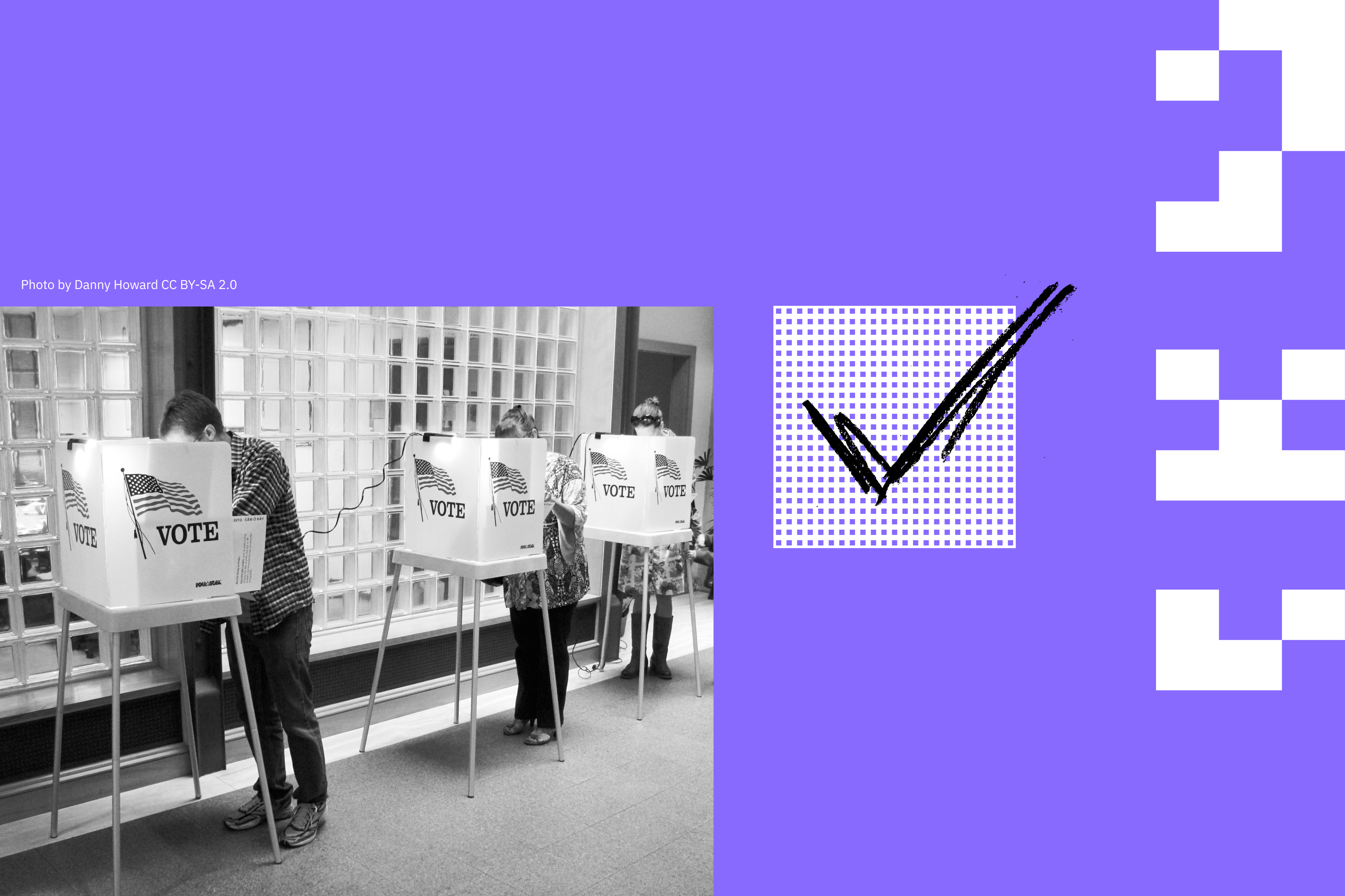
In the final phases of a hotly contested midterm race in the U.S., we’ve partnered up with URL Media, a multiplatform network of media organizations serving diverse communities across the country. This collective is deploying Suwali to serve voters with critical information about the 2026 midterm elections as they head to the polls on November 3. Seven partner newsrooms under the URL Media banner—AsAm News, DocumentedNYC, The Electorette, India Currents, Native News, The Oklahoma Eagle, and Epicenter NYC — will invite readers to chat with Suwali over SMS or WhatsApp, and get real-time answers to their questions, drawn entirely from newsroom archives and verified voter information guides.
We’re also working with our partners at Deep South Today and the Alliance for Trust in Media to measure whether and how Suwali can help improve trust and engagement between newsrooms and the communities they serve. Through this work, we expect to gain important insights into audience opinions on the utility and trustworthiness of Suwali and other tools like it, and overall attitudes towards the use of chatbots and artificial intelligence in news distribution.
These projects mark a significant milestone in Suwali’s trajectory and a critical experiment in how newsrooms and their audiences use and adopt public-facing AI. For our partners, ourselves, and the wider field, we are confident that these deployments will help us better understand how AI can best meet community information needs — and how technologists can design automated tools that help serve the public interest.
We are grateful to Press Forward and the David and the Helen Gurley Brown Institute for Media Innovation for supporting these initiatives. Read more about both projects.
Around the world, our partners and allies in independent media have been working overtime to cover youth-led public protests in India and across Europe. Since its unofficial launch in June, India’s so-called “cockroach” political movement has already triggered the resignation of one top official (the Minister of Education), and in recent weeks, protests have picked up again, with demonstrators decrying the ruling government’s decision to remove a reported 130 million names from voter rolls, and calling for the country’s top election official to resign. The Modi government has met the movement with heavy-handed measures that Reuters outlined in this immersive visualization. Protesters — women in particular — also have been heavily targeted online, where surveillance, doxxing and misinformation have been widespread. As it happens, our partners at The Quint have been covering the protests and the issues motivating people to speak out, all while using Suwali to scale their ability to connect with readers at home and on the streets.
In Europe, protests focused on the cost of living, poor educational infrastructure, and floundering labor markets have also dominated news cycles in recent weeks, with flashpoints in Albania, France, Italy and Spain. Movements of this kind often struggle to achieve their ultimate goals. But there are exceptions. In Serbia, university students and citizens who for two years have been pushing for an end to institutional corruption saw an enormous victory in parliamentary elections over the weekend, with the decisive electoral defeat of the party of Aleksandar Vučić by the opposition Student List party. Coupled with last spring’s ouster of Viktor Orbán’s Fidesz party in Hungary, the news from Serbia bodes well for a more just, democratic future for central Europe.
And in Brazil, our partners and colleagues here at Meedan have finally emerged from a bruising election cycle in which far-right candidate Flávio Bolsonaro (son of former president Jair Bolsonaro, who was barred from seeking re-election) sought – but ultimately failed – to unseat incumbent President Luiz Inácio Lula da Silva. In the lead-up, and during the nail-biting period between the first and second rounds of voting, our colleagues at Pacto pela Democracia, ran a chatbot powered by Meedan’s Suwali platform. Drawing on content from Pacto, Meedan, AlafiaLab, Democracia em Xeque, Redes Cordiais, and other collaborators, the bot helped voters learn the nuts and bolts of the electoral process, and ask critical questions about how votes are recorded and counted. With rumors alleging vote fraud now swirling, our partners’ work continues.
October 28-30 ᐧ Barcelona, Spain
Mozilla Festival, aka MozFest, offers three days of bold conversations and hands-on building of open source technologies for a better future. Meedan Executive Director Dima Saber will speak at a session on community-owned digital futures, and both Research Director Scott Hale and Senior Program Manager Haramoun Hamieh will be on site too. Come find us and say hello! Registration is open through October 30. Register here.
November 6-8 ᐧ Siracusa, Italy
At the 10 Points Unconference, a select group of journalists, editors, media leaders, researchers and innovators will work together around one central theme: Impact and how to measure it. Dima Saber will participate in this edition.
December 4-7 ᐧ Amman, Jordan and online
The ARIJ19 annual forum will bring together investigative journalists, editors and fact checkers in the Arab World in an effort to support a more empowered, connected and innovative ecosystem. Registration for in-person and online attendance closes on November 20. Register here.